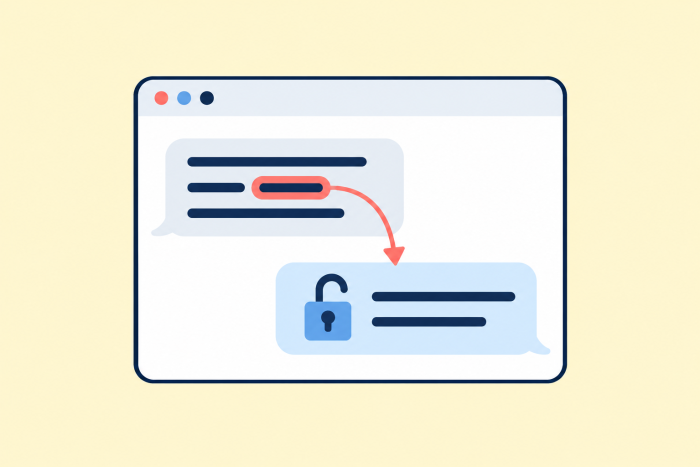
A keyword-based chatbot, also known as a keyword recognition-based chatbot, scans for specific phrases or words in a message sent by a user, then follows a rule attached to that term to take the next step. It’s a type of rule-based chatbot, using words as triggers to decide how a conversation goes. Although these chatbots might seem simple compared with the AI-powered chatbots many businesses use today, they can be helpful, particularly for companies that need only a simple tool to answer questions or support consumers.
They also give companies a lot more control when creating a chatbot because they get to decide what action each word or phrase triggers; the bot doesn’t invent a response based on what it thinks the customer means.
How do keyword recognition-based chatbots work?
To begin, you create for the bot a list of words and phrases a customer is likely to use during an interaction. Every term on that list is mapped to a specific response. For example, if a message contains the phrase “forgotten password,” the bot will automatically send the customer a list of password reset instructions. More complex systems can also use pattern-matching strategies, so if someone were to type “I can’t access my account” instead, the bot would still be able to understand the underlying problem and send the same response.
Such tools can prioritize the most specific or important rule when several triggers appear in one message. For instance, if someone says “My delivery hasn’t arrived; can I get a refund?,” the bot can be designed to address the refund query first. Similarly, if someone says, “I don’t want a refund; I want a replacement,” the bot rules can attach the word “don’t” to “refund,” even though both “refund” and “replacement” appear in the same sentence.
The biggest benefit of these bots is that they save a lot of time for customers and support teams. If a customer’s request is simple enough, a bot can often solve the issue by sharing the right information instantly, without involving a team member.
These bots can support chatbot use cases beyond customer service. Companies use them for employee support, helping team members check the details of an IT or HR policy, and also for helping customers find the right product on a site.
The downside is that, unlike AI natural language processing chatbots, keyword-based chatbots require more maintenance. Teams have to keep their keyword lists up-to-date, consistently adjust rules, and make sure exceptions are accounted for.
What are the advantages of keyword-based chatbots?
Keyword-based chatbots are simple but useful. They can speed up access to information for any user, and they give companies a lot more control than something like a generative AI chatbot. The bot won’t hallucinate if you’ve given it the right knowledge and data to draw answers from.
A keyword recognition-based chatbot is usually
- Easy to set up and maintain: All you need to do is define your rules, apply them to the bot, and make sure they stay up-to-date, which makes creating a chatbot much easier. You don’t have to source massive data sets, as you would if you were using an LLM, or provide the bot with a specific personality.
- Cost-effective: Building and running simple keyword-based chatbots is often cost-effective. Although chatbot pricing varies, these bots require a lot less computing power and specialized knowledge to implement, and they don’t cost as much to maintain if your rule set and keyword options stay relatively simple.
- Fast and reliable: Keyword-based chatbots don’t have to spend time “thinking” about a response or considering different answers; they match a term to a specific rule and take action immediately.
If you don’t need a complicated customer service solution and you don’t want models making judgment calls, keyword bots can fit the bill.
What are the downsides of keyword-based chatbots?
The downsides of keyword-based chatbots usually involve a lack of flexibility. These bots don’t use AI, so they can’t understand a word’s context or recognize synonyms you haven’t identified. A bot might handle the word “refund” perfectly but have no idea it’s related to “money back.”
A keyword-based chatbot can also struggle with typos or negation. If you don’t set your bot up carefully, it might see a phrase such as “I don’t want to cancel” and focus on the “cancel” part.
These bots require regular updates, considering the questions your customers are likely to have will change every time you introduce a new policy or product, or whenever you start to sell to a new audience.
While keyword-based chatbots are fantastic for simple tasks, they’re not meant for complex conversations, open-ended questions, or situations that demand real intelligence.
| Where keyword-based chatbots work | Where they tend to struggle |
|---|---|
| Simple frequently asked questions | Conversations with hundreds of possible phrasing options |
| Queries with risk-free approved answers | Multistage discussions with follow-up questions that depend on context |
| Repetitive customer requests | Interactions that might include typos, slang, negation, or synonyms |
| Situations with easy-to-test rules | Conversations with conflicting triggers |
Should you use keyword-based chatbots?
A keyword-based chatbot, similar to a menu-based chatbot, can be ideal if you expect your customer interactions to be simple enough to follow an obvious path. You should have a clear idea of the types of terms your customers are likely to use and the intent behind them.
For instance, in e-commerce, there are only so many ways a person will ask about an order cancellation, shipping status, or return policy, so it’s easy to create a bot that responds to those triggers. The same goes for a travel business that regularly answers questions about baggage allowances or check-in requirements.
Air India, for instance, uses simple chatbots to answer about 40,000 questions a day across more than 1,300 query types.
A keyword recognition-based chatbot is less likely to make sense for you if the questions you get every day are a lot more nuanced. If people need help tracking down the right product, for instance, and they’re not sure where to begin, they might need to ask multiple questions before they find what they need.
If you deal with customers who use many types of language or slang, these chatbots might struggle, particularly if you don’t regularly test to make sure they know every variation of a specific term.
They’re also not ideal if you don’t already have a strong knowledge base. These bots need to pull answers and information from somewhere based on the rules you’ve set.
Get a smarter chatbot in minutes: Try Noupe
Keyword-based chatbots can be helpful in a lot of situations. If your chatbot ideas involve helping customers solve common problems quickly, or you’re looking for something that can help you qualify leads and send them to the next stage in the purchasing journey, a keyword-based chatbot could be an excellent choice.
The downside is how much maintenance they can require. You have to set up rules and information for the bot for every new phrase, policy, or customer habit.
Noupe offers an easier route. You give the system your website URL and any other information it needs, and it builds an answer base from those resources. You install the bot with an embed code. After it’s deployed, Noupe will keep learning from anything you add to your site, with no manual updates required.
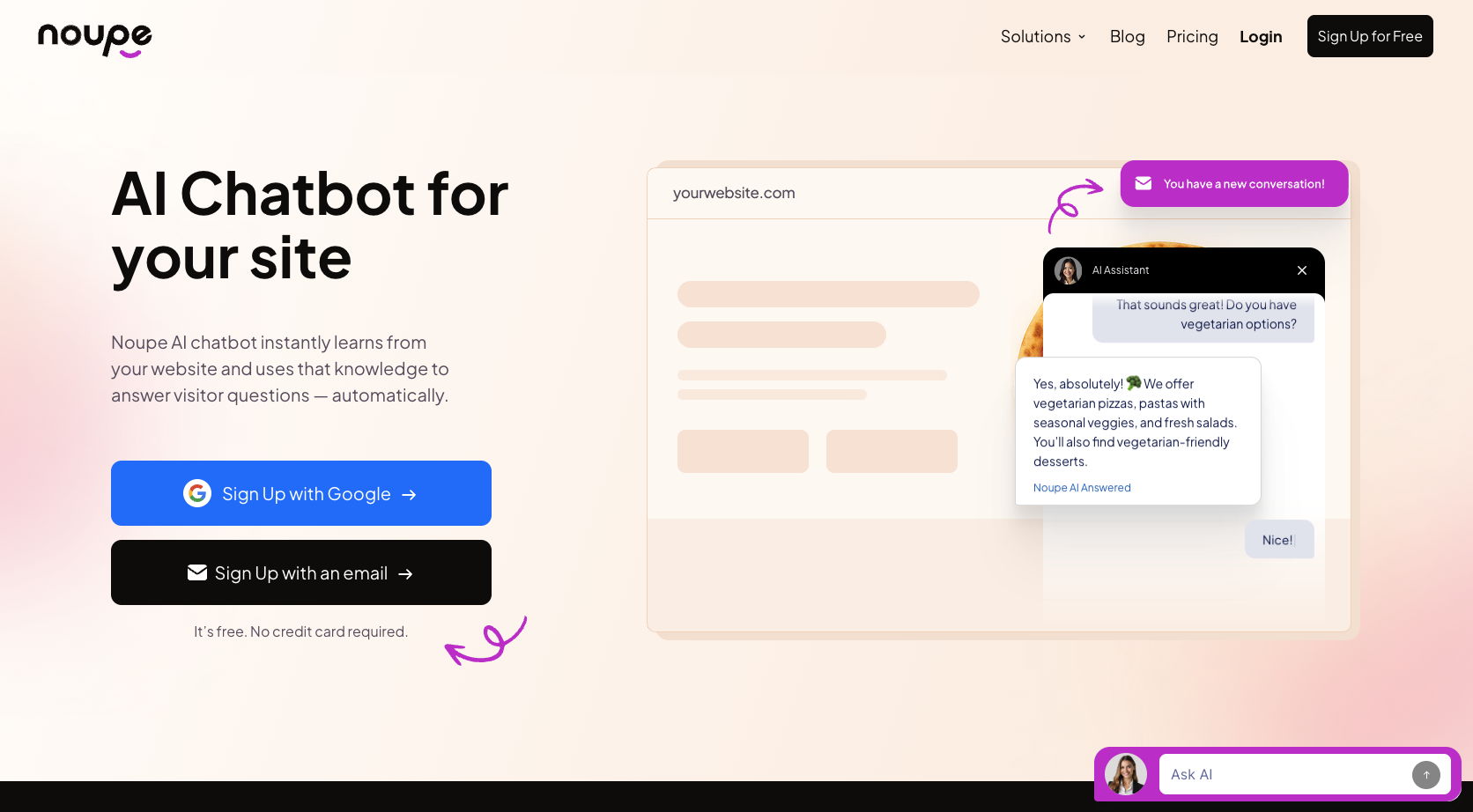
Additionally, Noupe automatically detects and responds in a user’s language. You won’t have to support another language with keyword rules and terms, synonyms, and spelling variations.
Noupe helps companies preserve the “quick and simple” appeal of a keyword-based chatbot without compromising on the quality of the responses customers get. You can try the tool for free today to see how well it could work for your business.
How do you choose the right chatbot type for your business?
Once someone asks “What is a chatbot?,” everyone starts wondering which type of bot will best serve the company’s needs. But not every company needs advanced bots with AI capabilities right away.
A keyword-based chatbot could be enough if most of the questions you get from customers are repetitive and use predictable wording. If customers are asking about things such as delivery times or opening hours and the answers are fixed, a simple chatbot is enough. It can save time for both your customers and your team, provided someone keeps the trigger list up-to-date.
You need to start thinking about more complex chatbots only when the conversations are more multifaceted, you can’t always predict the words your customers are going to use, or you know your team will have to spend too much time updating rules.
Is a keyword-based chatbot still worth using in 2026?
Keyword-based chatbots are worth using in the right circumstances. When your question set is small and simple, the language and answers are predictable, and nothing terrible will happen if the system misunderstands a query, a keyword-based chatbot is an affordable and convenient option.
Having a keyword-based chatbot doesn’t stop you from experimenting with other types of chatbots. The future of AI chatbots is likely to remain mixed, with companies using different types of bots for different types of interactions. You might have a keyword-based chatbot that handles FAQs and a conversational or generative AI bot for more nuanced interactions.
If you want to simplify customer service for customers who have straightforward questions, or you need help making the path to purchase easier for your leads, Noupe offers a great way to get started with a chatbot that requires minimal setup and maintenance.