
Intercom (Fin) deserves its ranking as one of the best AI tools for customer support in 2026. It’s one of the systems that has helped to make support software feel more coherent in recent years, with a unified inbox, capable AI features, as well as proven high deflection rates.
Salesforce’s involvement might do a lot to reinforce the system in 2026, but at the same time, plenty of companies are facing pressure that might start pushing them towards Intercom alternatives.
Gartner found 91% of customer service leaders were being pushed by executives to implement AI in 2026, but only 24% had seen any positive financial returns. As the cost for tools like Fin keeps creeping up, with resolution and usage fees stacking on top of each other, organizations might find themselves in need of a system they can more easily justify paying for.
What is Intercom, and what does it offer?
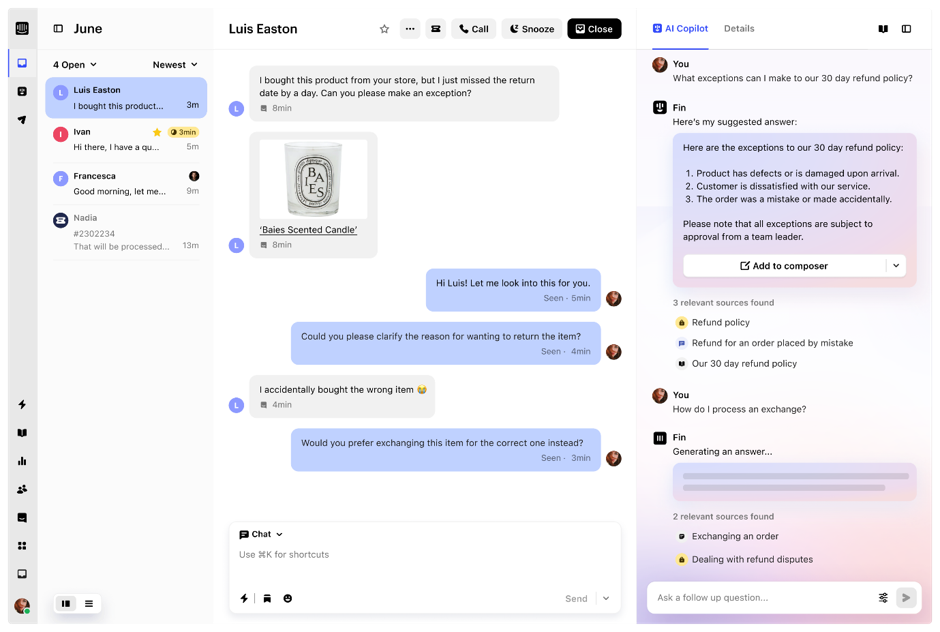
Intercom is the customer service platform inside Fin (now owned by Salesforce). The ownership has changed, but the Intercom name is still there, covering the help desk side of things, while Fin acts as the AI agent customers tend to interact with first.
The wider Intercom toolkit gives you a shared inbox, ticketing, Messenger, knowledge management, workflows, reporting, and omnichannel support. Fin, on the other hand, deals with customer conversations throughout that setup.
It can answer common service questions, qualify sales prospects, recommend products to specific users, follow company rules, and also use APIs to take actions on other tools. All around, it’s an excellent tool, with a 4.5 out of 5 rating on G2, but it’s also not ideal for every company.
The pricing aspect is one reason for that. Essential plans start at a reasonable $19 per month annually, Advanced plans begin at $85, and Expert plans start at $132. However, Fin has its own costs, starting at $0.99 per resolved outcome; then there are separate charges for channels like outbound messaging, WhatsApp, SMS, and phone conversations.
Why do teams consider alternatives to Intercom?
Intercom and Fin can be an excellent combo for the right use cases, but no tool for AI customer service suits every situation. When organizations start looking at Intercom alternatives, it’s usually for one or more of a few reasons:
- The Pricing Model: Chatbot pricing can be tricky at the best of times, but many companies find Intercom’s model particularly difficult to understand. First, you’re paying for seats and usage with Intercom, then you’re paying for Fin’s outcome-based pricing. Beyond that, there’s the separate cost for the various channels you might be using.
- Too Tech for One Job: Teams running SLAs, managing several inboxes, or handling both formal ticket queues and voice support might have a lot of use for Intercom. Businesses dealing mainly with repetitive website questions tend to have a smaller problem, and Intercom can overcomplicate things.
- Resolution Issues: Although Intercom has achieved high deflection rates, actual resolution rates can vary, especially since Fin tends to assume a problem has been resolved when customers go quiet, which means you pay for the outcome even if the problem isn’t fixed.
- Technical Limitations: Like many AI customer service tools, Intercom and Fin keep improving, but they do have limitations. There’s no complex reasoning model here (for now), and Fin can’t always understand things like screenshots or images.
There’s also some uncertainty around the future of Intercom in general, since Salesforce acquired the company. It’s not entirely clear right now whether Intercom will keep growing as a separate system, or be folded into more of what Salesforce is doing with Agentforce.
Intercom alternatives compared: Features, pricing, and best uses
| Tool | Best for | Key features | Starting price |
|---|---|---|---|
| Noupe | Website-first AI support | Website learning, custom knowledge, multilingual replies, conversation delivery | Free; Basic $20/month |
| Zendesk | Complex support operations | AI Agents, ticketing, omnichannel routing, telephony, knowledge | Suite Team $55/agent/month annually |
| Kayako | Autonomous support actions | AI actions, customer history, multichannel support, human escalation | $1 per AI-resolved ticket |
| Freshdesk Omni | Growing omnichannel teams | Freddy AI Agent, ticketing, routing, analytics, knowledge | $29/agent/month annually |
| Tidio | Ecommerce chat and automation | Lyro, live chat, ticketing, Flows, visitor data | Free; Starter $24.17/month annually |
| Crisp | Workspace-priced support | Shared inbox, AI, workflows, knowledge, routing | Free; Mini $45/workspace/month |
| Zoho Desk | Affordable help desk depth | Ticketing, Zia AI, omnichannel support, workflow automation | Free; paid from $7/user/month annually |
| Salesforce Service | Enterprise CRM-led support | Agentforce, cases, CRM data, voice, service automation | Starter $25/user/month; fuller Core tier $195 |
| HubSpot Service Hub | CRM-connected support | Customer Agent, help desk, CRM, ticketing, knowledge | Free; Starter $7/seat/month annually |
| Olark | Human-first website chat | Live chat, routing, analytics, AI Website Agent | $29/agent/month for human chat |
There are arguably far more than ten Intercom alternatives worth looking at; the options below were chosen based on our understanding of what companies tend to dislike about Intercom and what they may be prioritizing as they compare the competition.
1. Noupe: Best for website-first AI support
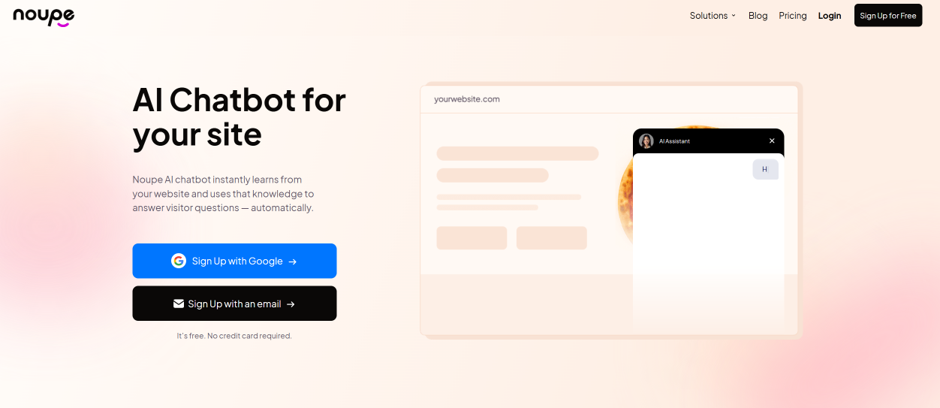
Compared to some other Intercom alternatives, Noupe might seem like the simplest choice, which is arguably what will also make it the best one for many companies. Not every company needs ticketing, multiple channels, and agentic AI workflows to see the benefits of AI for customer service.
Noupe makes building a chatbot that can answer the questions customers already have when they’re browsing your site easier. You give it your website, as well as any additional information it might need, and it builds a repository it can use to respond to queries.
You can embed the tool into your website with nothing but a line of code, then adjust the widget’s size, position, color, avatar, as well as the first message. Plus, Noupe automatically detects the language your customer uses and responds accordingly, so it’s ideal for global brands.
The best thing about Noupe, aside from how easy it is to set up, is how much you can reduce the typical maintenance involved in using a bot. You can still run tests and make changes, but Noupe automatically updates its repository whenever you change your website, so you’re not sharing updates with the system every month.
It also makes sure that humans can take over a conversation without starting again by sending previous interaction information into a shared inbox for your team.
Starting price: Starting with a free plan for 100 monthly conversations, while the Basic plan costs $20 per month.
Pros:
- Learns directly from your website content
- Requires very little setup
- Allows for extensive customization
- Automatically supports multilingual interactions
- Includes a unified inbox
Cons:
- No advanced ticketing features
- Less functionality for complex routing and reporting
2. Zendesk: Best for complex support operations
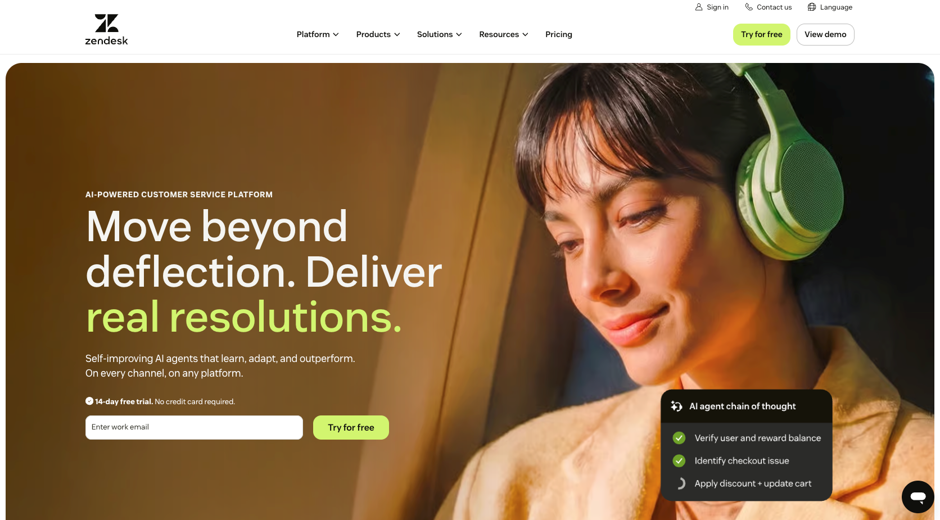
Zendesk is one of the closest alternatives to Intercom in terms of features and functionality, although the emphasis of the platform is different. Intercom was mainly built around messaging and customer engagement, while Zendesk directs its attention more towards ticketing and formal support.
The platform includes industry-leading tools for managing complex issues with multi-team routing and SLAs. You also get AI agents you can customize, a knowledge base, live messaging, plus access to telephony for omnichannel requirements.
The unified workspace aligns human and AI employees in the same workplace, and even gives team members additional tools to help them save time on tasks. Also, there are endless integrations available, and on higher tiers, you can get your own copilot for admin work.
Still, it’s probably not the Intercom alternative we’d recommend for someone who’s switching because they find their current system too complicated. There’s a lot of work involved in initial setup and onboarding, and the costs can stack up too when you start adding more advanced AI.
Starting price: $55 per agent per month for Suite Team when you pay annually.
Pros:
- Better than Intercom for ticket-first support teams
- Excellent employee support tools
- In-depth analytics
- Broad channel support, including phone options
- Highly customizable AI agents
Cons:
- Difficult setup and management compared to alternatives
- Costs can rise with advanced AI features
3. Kayako: Best for Automating Routine Support
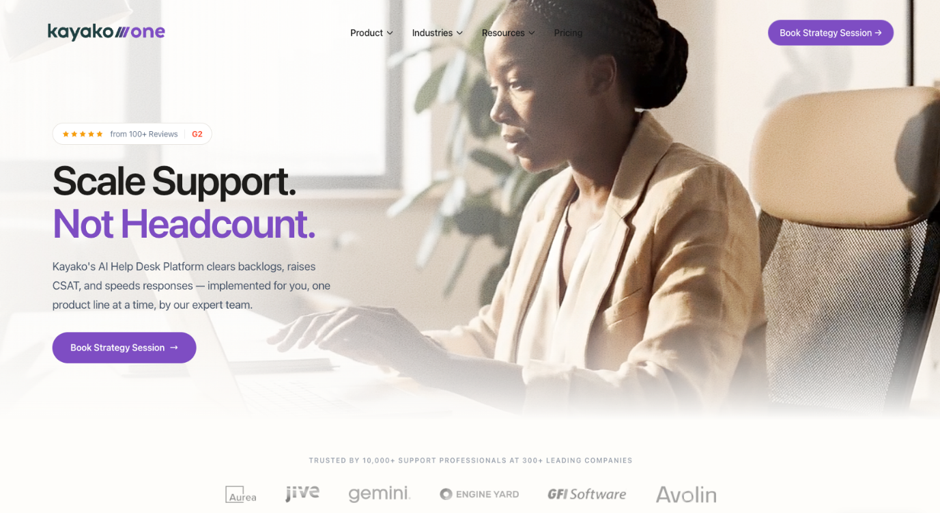
Kayako is a worthwhile alternative to Intercom for companies looking for ways to automate more day-to-day support work. The platform works with a variety of channels, including live chat, social, and email, allowing teams to build a comprehensive customer profile and history.
The AI assistant, Agent Kay, can also connect to tools like Stripe, Shopify, Salesforce, Zendesk, and HubSpot, alongside custom APIs. All of those connections enable Kay to complete tasks like issuing refunds or sending return labels, and you only pay ($1 per resolution), when Kay fully closes a ticket.
Kayako keeps live chat and AI chatbots in the same place, and lets you control a lot of the details that determine how your chatbot works. It also has some excellent features for collaboration, letting teams @mention colleagues and share internal notes.
The problem is that, like Intercom and Zendesk, Kayako requires quite a bit of initial setup work, especially when it comes to defining permissions for what your AI tools can actually do. If you want a system that can answer questions without having to actually change something, Noupe is a better tool.
Starting price: The Kayako One subscription is quote-based; Agent Kay costs $1 per resolution.
Pros:
- Omnichannel support for chat, social, and email
- Outcome-based pricing for AI support
- Excellent collaboration tools for teams
- Handles triage and routing very well
- Unifies customer journeys into a single history
Cons:
- Difficult to use for custom reporting
- Pricing isn’t fully transparent
- Can be complicated to set up permissions
4. Freshdesk Omni: Best for Growing Omnichannel Teams
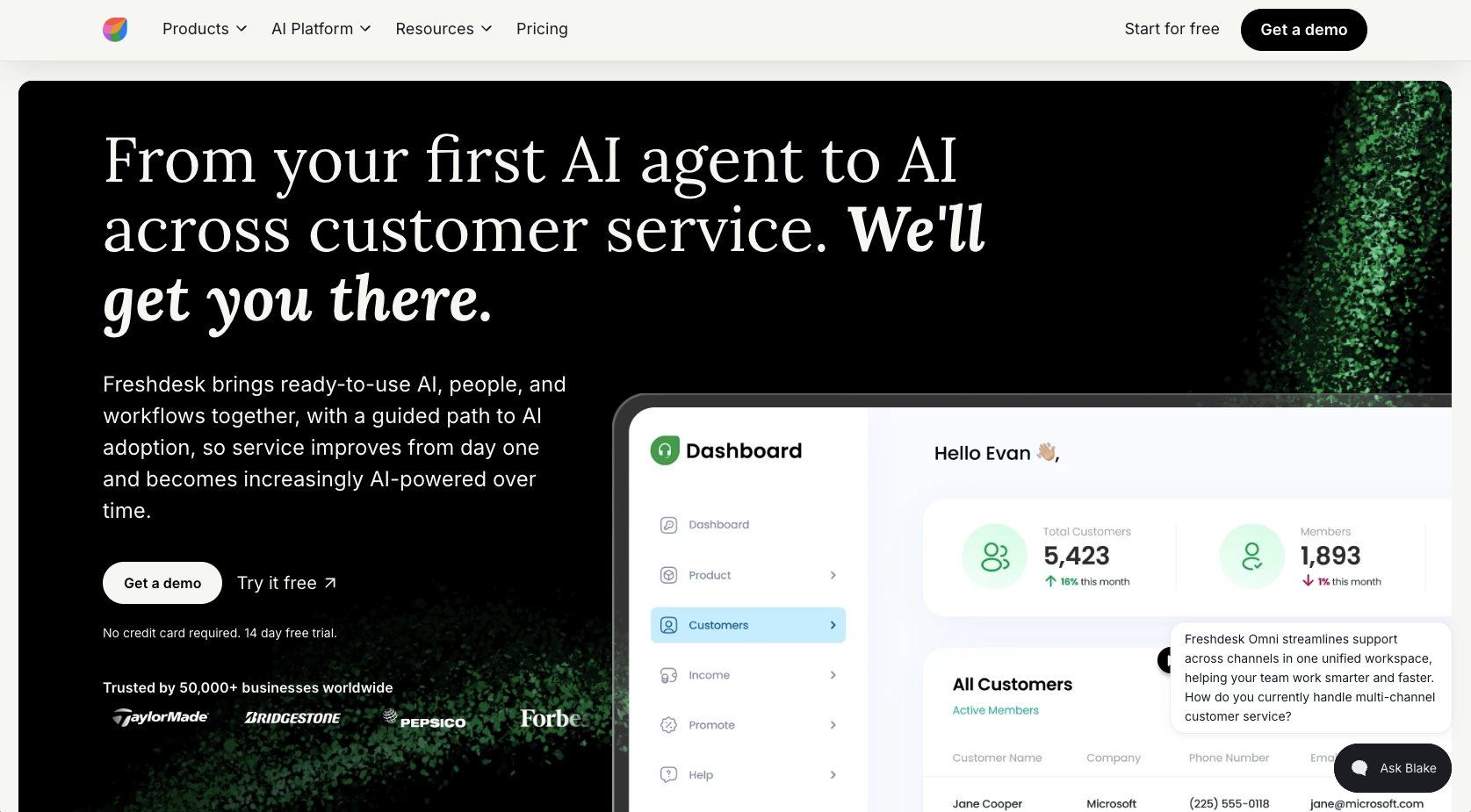
Freshdesk Omni is one of the Intercom alternatives worth looking at when you’re looking for a combination of omnichannel functionality and CRM integration. The full kit gives you email, chat, voice, ticketing, and your customizable Freddy AI assistant in the same place, plus impressive automation capabilities for things like end-to-end SLA tracking and collision detection.
The Omniroute feature is particularly good for making sure conversations reach the right people, as it assigns discussions based on both availability and skills. Plus, Freddy AI can do more than answer customer questions; it can also draft replies and summarize tickets for team members too.
Although Freshdesk is still a little more complicated setup-wise than Noupe, it’s one of the more user-friendly tools on this list, and most people praise how simple the interface is, even if managing integrations can be a little tricky.
The biggest issue is that the cost of this toolkit can grow much faster than users expect, particularly when you add in things like calling or start trying to access features like Copilot support.
Starting price: Growth plans start at $29 per month, though Freddy sessions cost around $49 per 100 discussions.
Pros:
- Excellent omnichannel routing capabilities
- Better for ticketing workflows than Intercom
- AI agents and copilot functionality in one place
- CRM support included through Freshworks
- Relatively easy to use for beginners
Cons:
- Can be quite expensive depending on the features you need
- Some complications with integration
5. Tidio: Best for ecommerce chat and automation
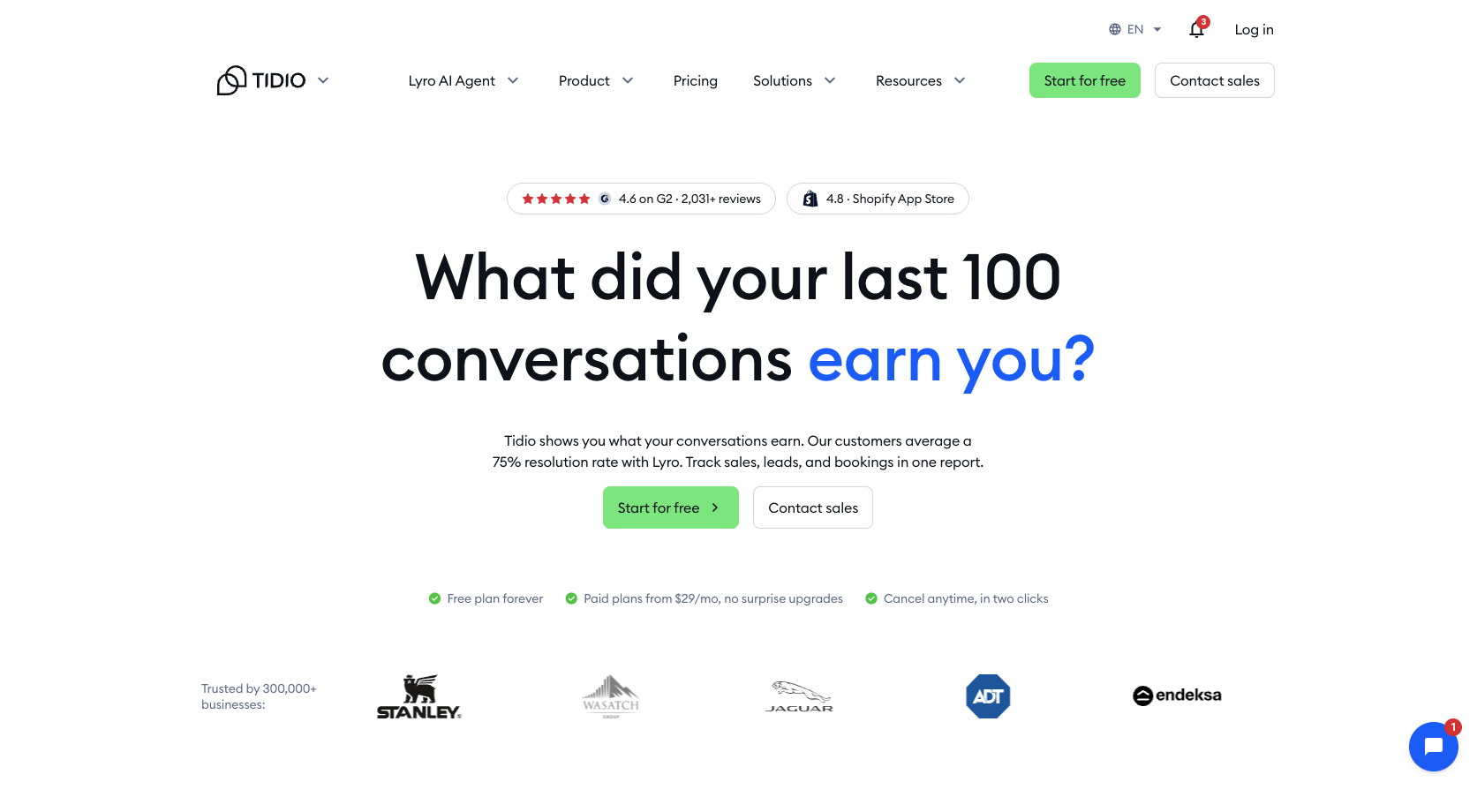
Tidio is an excellent alternative to Intercom if you’re based in the ecommerce industry and you want a relatively simple solution for handling things like lead capture or answering common questions about products, delivery, or order status.
The Lyro AI agent deals with open-ended questions by drawing information from approved content, while the Flows feature lets you establish your own automation strategies for things like prompting people through a checkout or handling cart recovery. Human employees can also take over interactions within the same inbox.
Tidio integrates seamlessly with tools like Shopify or WooCommerce, and it can also help with tasks like visitor tracking, which can add extra insights for your analytics strategy. Like Noupe, you can also install this tool on a website with a single piece of code.
Unfortunately, this isn’t the ideal tool for customer support teams that rely on tickets or multi-tier escalation, and the reporting tools can be limited when it comes to customization.
Starting Price: Starting at $29 per month for the initial plan, with custom plans available.
Pros:
- Designed for ecommerce with useful integrations
- Easier to set up than some Intercom alternatives
- Helpful no-code builder for automated flows
- Multi-language and multi-channel support
- Cheaper than an Intercom deployment
Cons:
- Limited for customized reporting
- Not intended as a full ticket-based support desk
- Not many advanced routing features
6. Crisp: Best for workspace pricing
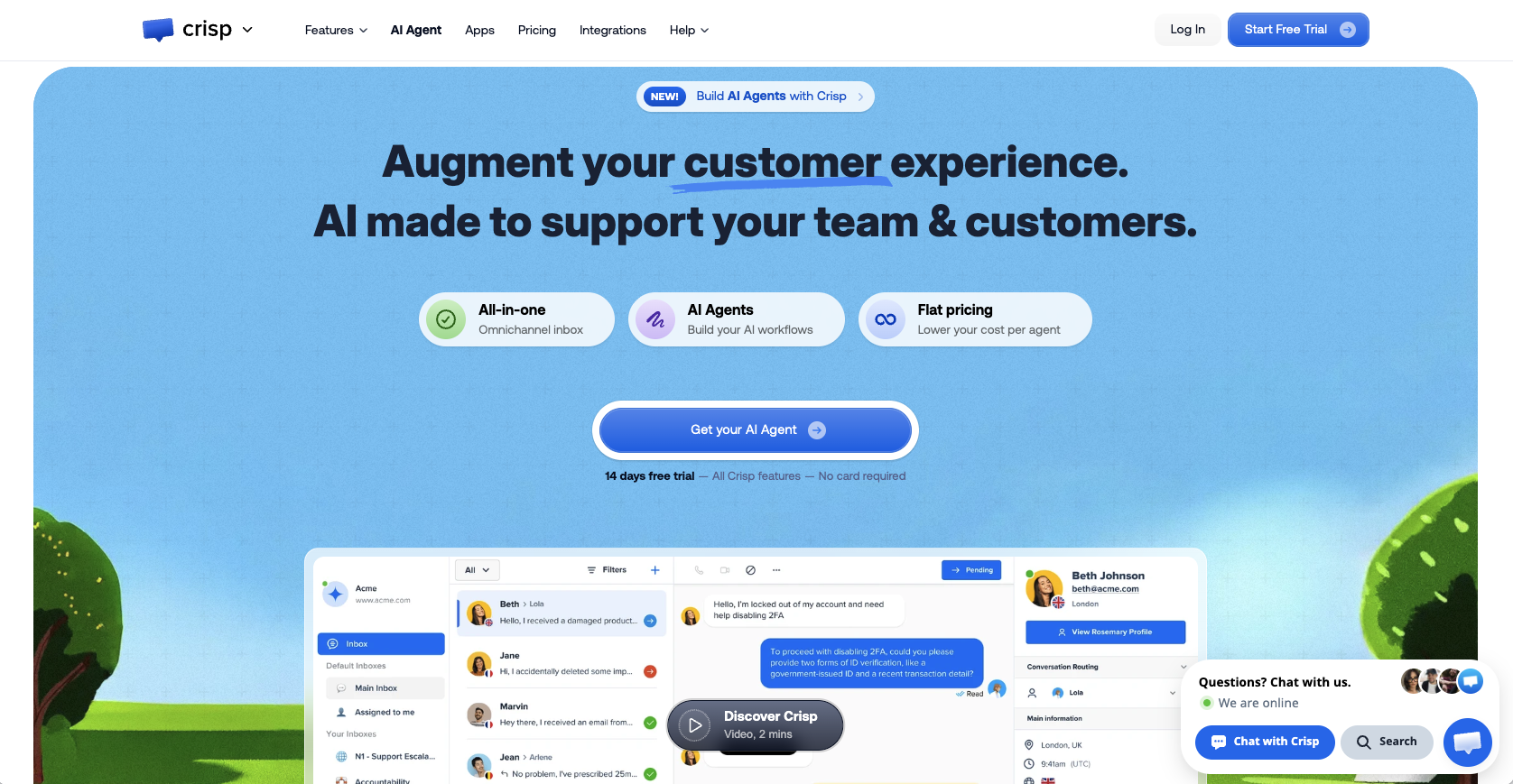
Crisp is one of the better Intercom alternatives if what’s been bothering you about Intercom is the way it handles pricing. It might not be the cheapest platform, but you’re charged per workspace rather than per agent or potential bot outcome, which can be an easier setup for companies still figuring out their chatbot use cases in the first place.
Though the system mostly focuses on using AI for omnichannel messaging, there are more features here than you might expect, including a shared inbox, custom workflows, a knowledge base, routing options, and AI-assisted segmentation.
Higher-tier plans also include access to ticketing features, as well as more functionality through Hugo AI, a complete data hub for analytics, and widget tools that let Hugo trigger actions on a website, such as applying discounts for a specific purchase.
Still, the pricing does have some unpredictable elements, because Hugo still uses credits, and you may end up on Pay-as-you-go billing as your usage increases. The good news is that you can at least avoid paying for a license for every user.
Starting Price: Free plan for live chat, with paid plans starting at $45 per month.
Pros:
- Useful features like Magic Reply and AI search
- Complete AI data hub with assisted segmentation
- Workspace pricing for larger collaborative teams
- Shared inbox with omnichannel support
- Routing, summaries, and workflows included
Cons:
- Not the best for reports and analytics
- AI credits are necessary for Hugo
7. Zoho Desk: Best for affordable help desk depth
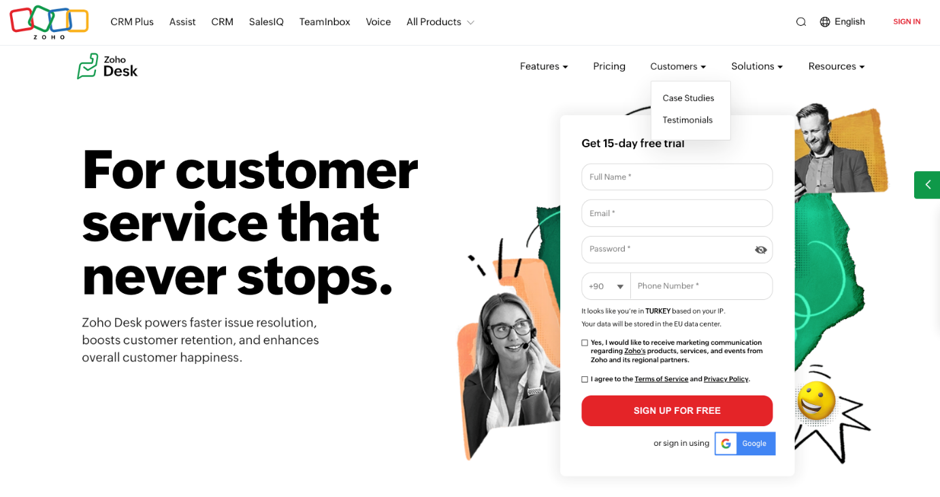
If you’re comparing Intercom alternatives because you want a system that supports ticketing strategies and automation, without paying for an enterprise-style plan, Zoho Desk could be a great choice. You get far more than another menu-based chatbot here. Even the early-level plans come with access to tools for ticket management, SLAs, and assignment rules.
You’ll also be able to manage customer service with combined human and AI support across phone, messaging, or social channels. Zia brings plenty of value to teams too. You can put the AI assistant in front of customers to answer questions directly, or use it behind the scenes to give agents sentiment insights, ticket summaries, or suggested tags. Companies can also build workflows around your own processes using blueprints and rules.
Of course, Zoho Desk is definitely more appealing if you’re already elsewhere in the Zoho ecosystem. Connect it with Zoho Analytics or CRM, and it feels like another piece of a system you already know.
There are still issues with things like setting up ticket notifications and integrating external apps, of course. Plus, the mobile app has its problems, according to user reviews. It’s still a great option for teams who think in queues and cases rather than in terms of product messaging.
Starting Price: Begins at $7 per user per month for the Express plan.
Pros:
- Far lower starting price than you get from Intercom
- Good for ticketing and SLA-focused teams
- Works with the wider Zoho ecosystem
- Zia is great for ticket tagging and sentiment analysis
- Omnichannel support included
Cons:
- Slight learning curve compared to something like Noupe
- Limited mobile app performance
- Not the largest selection of integrations
8. HubSpot Service Hub: Best for CRM connectivity
Arguably, Intercom is still a great option when you’re building chatbots or AI agents that need access to CRM data, especially now that Fin, the company formerly known as Intercom, is part of Salesforce.
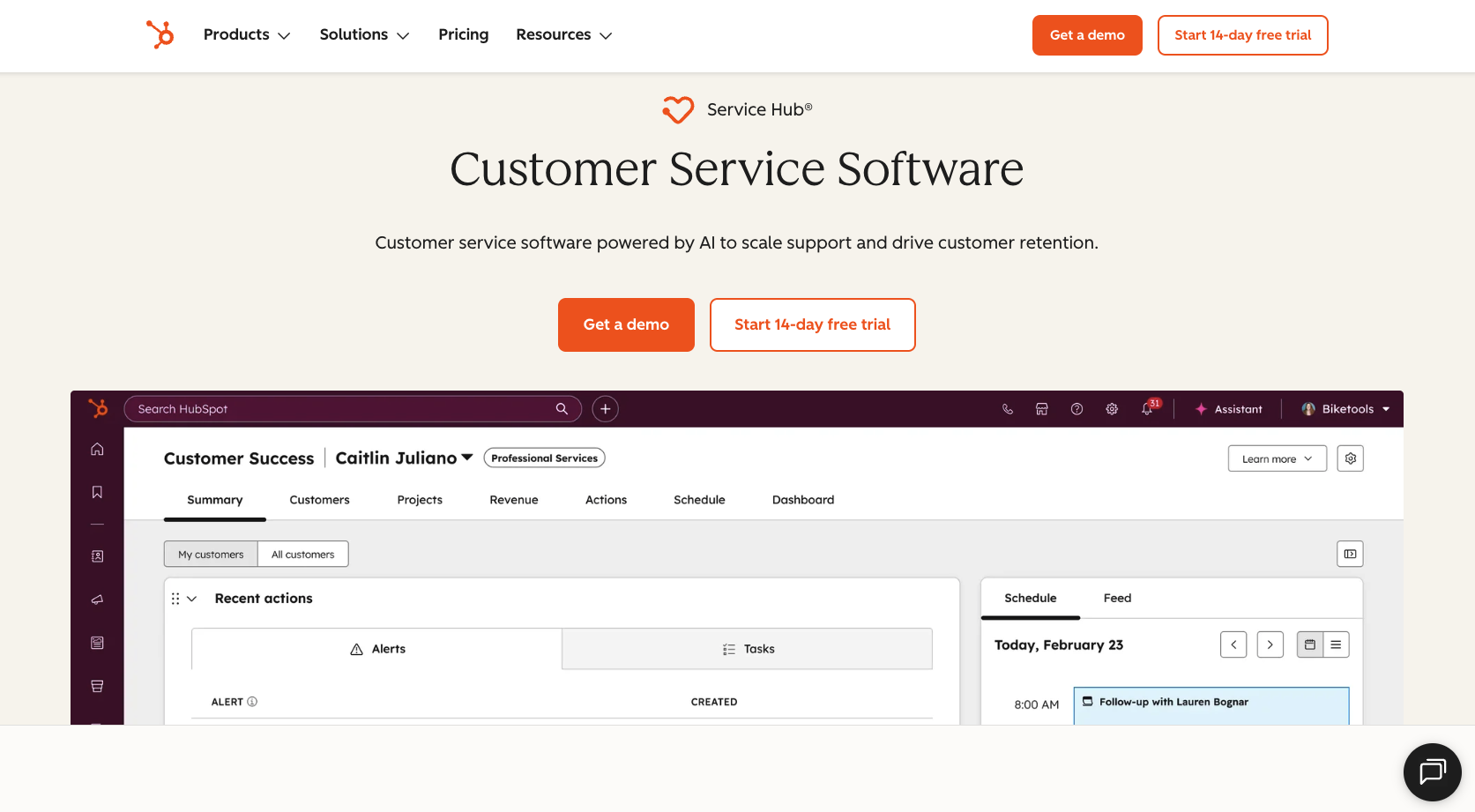
HubSpot may suit you better if you want a setup that feels easier to get your head around while covering much of the same ground. Service Hub gives you live chat, ticketing, a help desk workspace, knowledge tools, customer success features, and routing tied directly to the CRM record you already have.
There’s also a full chatbot builder that you can use to design your own bots capable of handling specific tasks, like answering questions about order status or returns. That comes with useful playbooks and templates, so you don’t need a lot of coding knowledge to begin.
Still, this is quite an expensive tool compared to some of the others on this list, particularly if you’re combining HubSpot Service with the CRM and various other tools to make the most of the ecosystem benefit.
Starting Price: $90 per month for Service Hub Professional, with outcome-based pricing for AI.
Pros:
- Excellent for CRM connectivity
- Customer agent uses tickets, CRM data, and conversation context
- Works well with HubSpot’s range of sales and marketing tools
- Easy tools for creating your own dedicated bots
- Fantastic reporting and analytics
Cons:
- Expensive when you consider the whole ecosystem
- Mandatory onboarding costs
9. Salesforce Service Cloud: Best for enterprise customer support
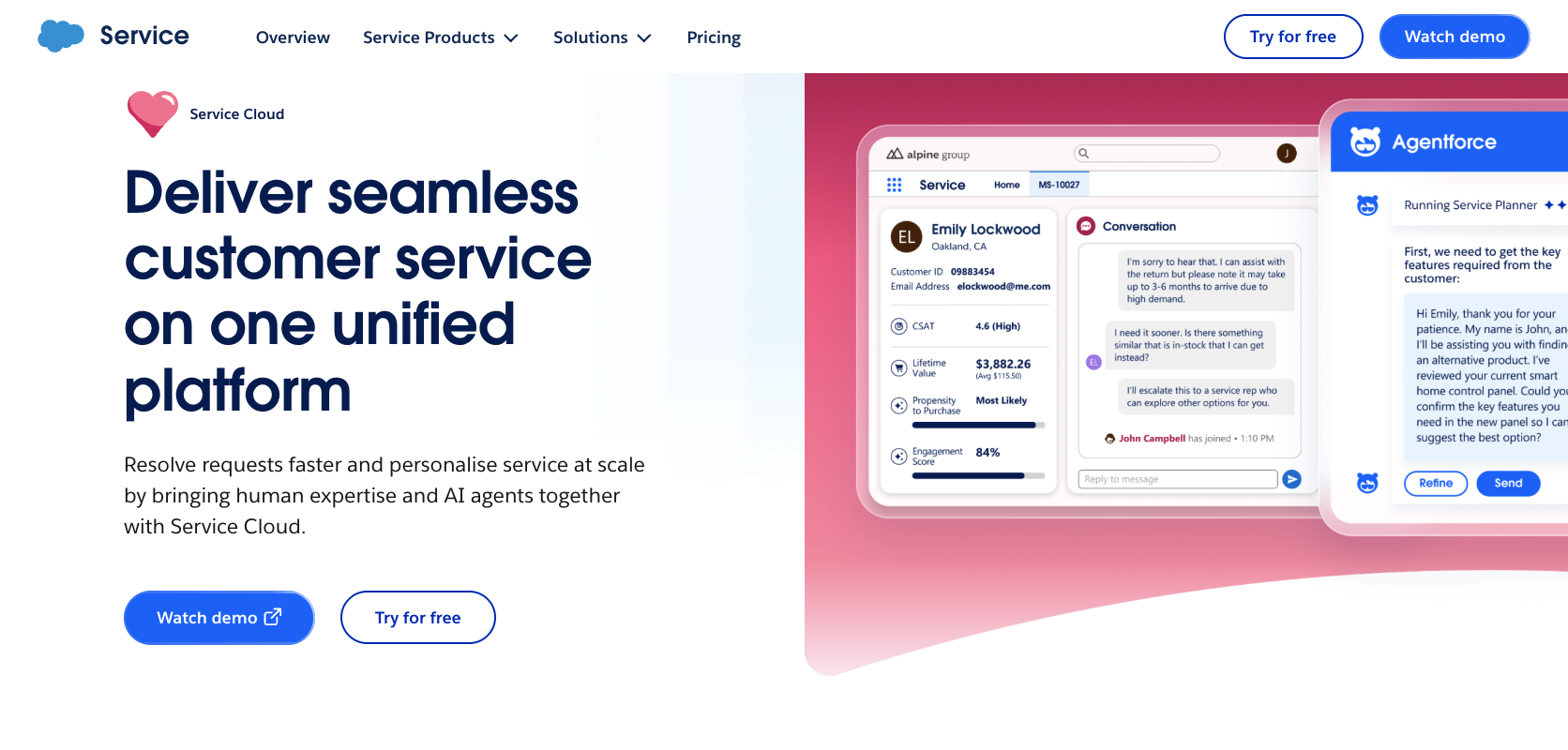
Although Salesforce owns Intercom now, it hasn’t replaced its own toolkit. The Salesforce Service Cloud system is bigger than ever, and it’s one of the most customizable Intercom alternatives around, making it particularly appealing to enterprises with very specific requirements.
Like HubSpot, Salesforce helps companies build AI systems that interact with data from their CRM and other tools, but the bigger advantage comes from the full Agentforce kit. While Intercom’s Fin is a specialist customer-facing agent, Agentforce gives you a full suite for building agents that can handle any customer service, sales, or marketing request you can imagine.
You get complete control of everything from the tools your agents use to the kind of data they collect, which is ideal if you’re worried about guardrails and security. You’ll also be able to use AI to handle conversations across any channel, including voice.
The big benefit of Salesforce is also its drawback. It’s an enterprise system, which means lots of control comes with higher costs, a much bigger learning curve, and a serious amount of administrative overhead.
Starting price: Starter Suite starts at $25 per month. Agentforce for Service costs $2 per resolution.
Pros:
- Full connectivity with all other Salesforce tools
- More powerful features than most Intercom alternatives
- Extensive agent builder with Agentforce
- Good contact center focus through Agentforce Contact Center
- Great for security, control, and governance
Cons:
- Higher cost than any other alternative
- Requires a lot of setup and maintenance
- Lacks AI in cheaper tiers
10. Olark: Best for human-first web chat
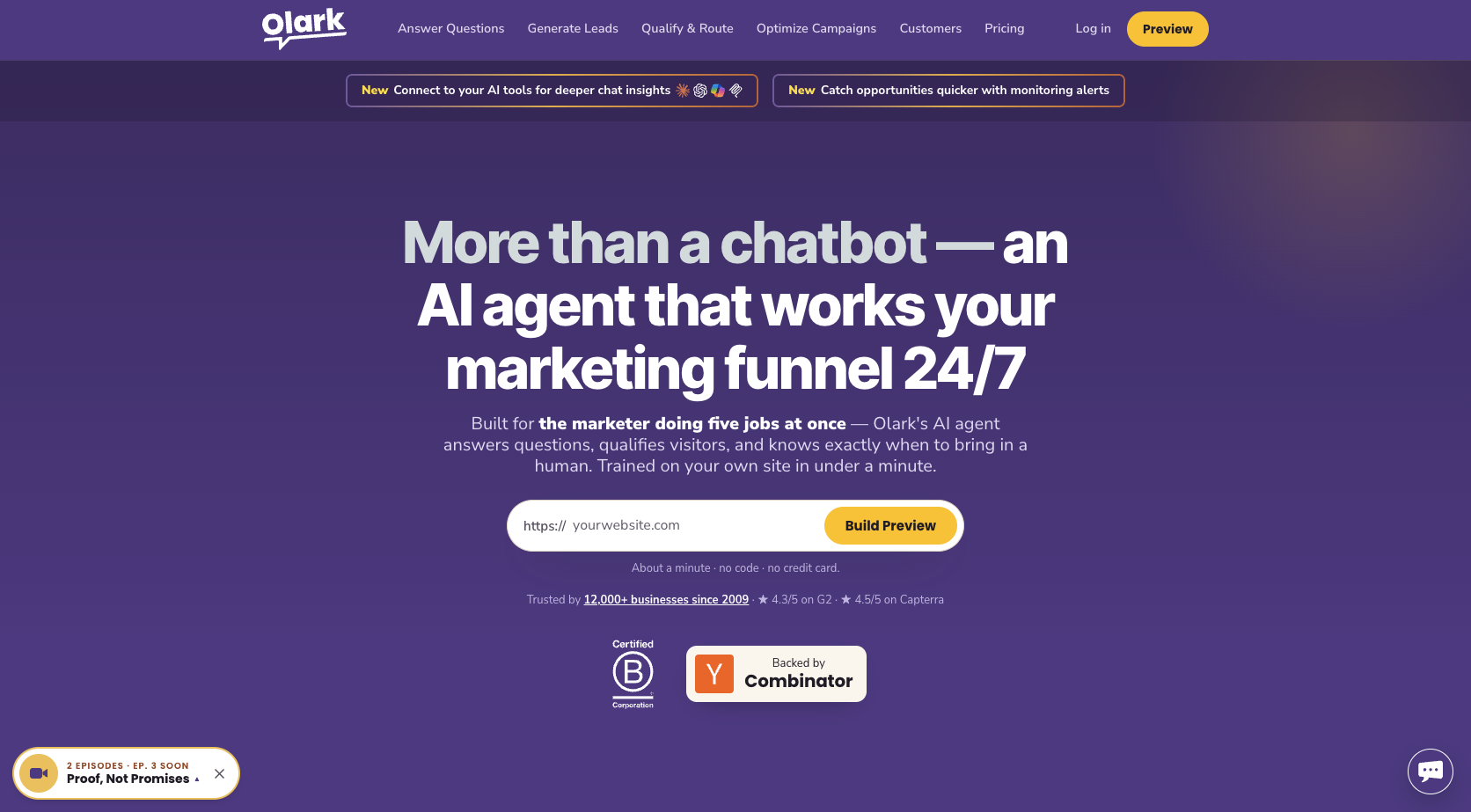
Olark goes in a very different direction from all of the other Intercom alternatives mentioned here, because it assumes most people still want real humans handling the majority of support requests. That doesn’t mean it lacks AI functionality; you can still create and customize chatbots and build your own automation strategies.
There’s also an AI website agent (which costs $400 per month) that supports unlimited AI conversations with absolutely no token costs. Still, Olark is more of the tool companies choose when they want to put live human chat first in their support strategy, and only turn to AI when the need actually makes itself obvious.
Within the complete kit, you get routing tools, visitor information capture, chat history, and reporting, as well as integration options for popular CRMs. The system can be quite affordable too, especially compared to Intercom, where the bill increases as traffic grows.
Unfortunately, the automation features are relatively limited, and you can end up paying more for features like live chat translation or advanced analytics.
Starting price: Begins at $29 per agent for human chat. $400 per month annual cost for the AI website agent.
Pros:
- More predictable pricing than Intercom
- Very easy to use, especially for live chat
- Decent amount of customization available
- Strong integrations with CRMs and other tools
- Reliable basics like chat automation and canned messages
Cons:
- Limited for advanced AI features and automation
- Add-on costs for power-ups and special features
How to choose the right intercom alternative for your team
Intercom still has a lot to offer companies in 2026, but if you’re already shopping around, there’s probably something specific you want an alternative to do better. For support teams built around tickets, SLAs, and structured queues, Zendesk, Zoho Desk, and Freshdesk are likely to catch your attention first.
If you’re looking for something flexible and connected to your CRM, it makes sense to consider HubSpot or Salesforce. Alternatively, Kayako might interest you when you need your AI to take action, while Tidio will appeal to companies in the ecommerce space. Crisp and Olark are more budget-friendly, depending on how you plan to use your AI tools.
Noupe is the winner for simplicity. If people keep asking questions your website already has the answer to, and you want a quick way to move them in the right direction, Noupe is the most straightforward, affordable option. It also makes maintenance a lot easier, since the knowledge base it uses updates automatically.
If that kind of simplicity, combined with flexible customization and multilingual capabilities, appeals to your team, you can start with a free trial of Noupe today.